
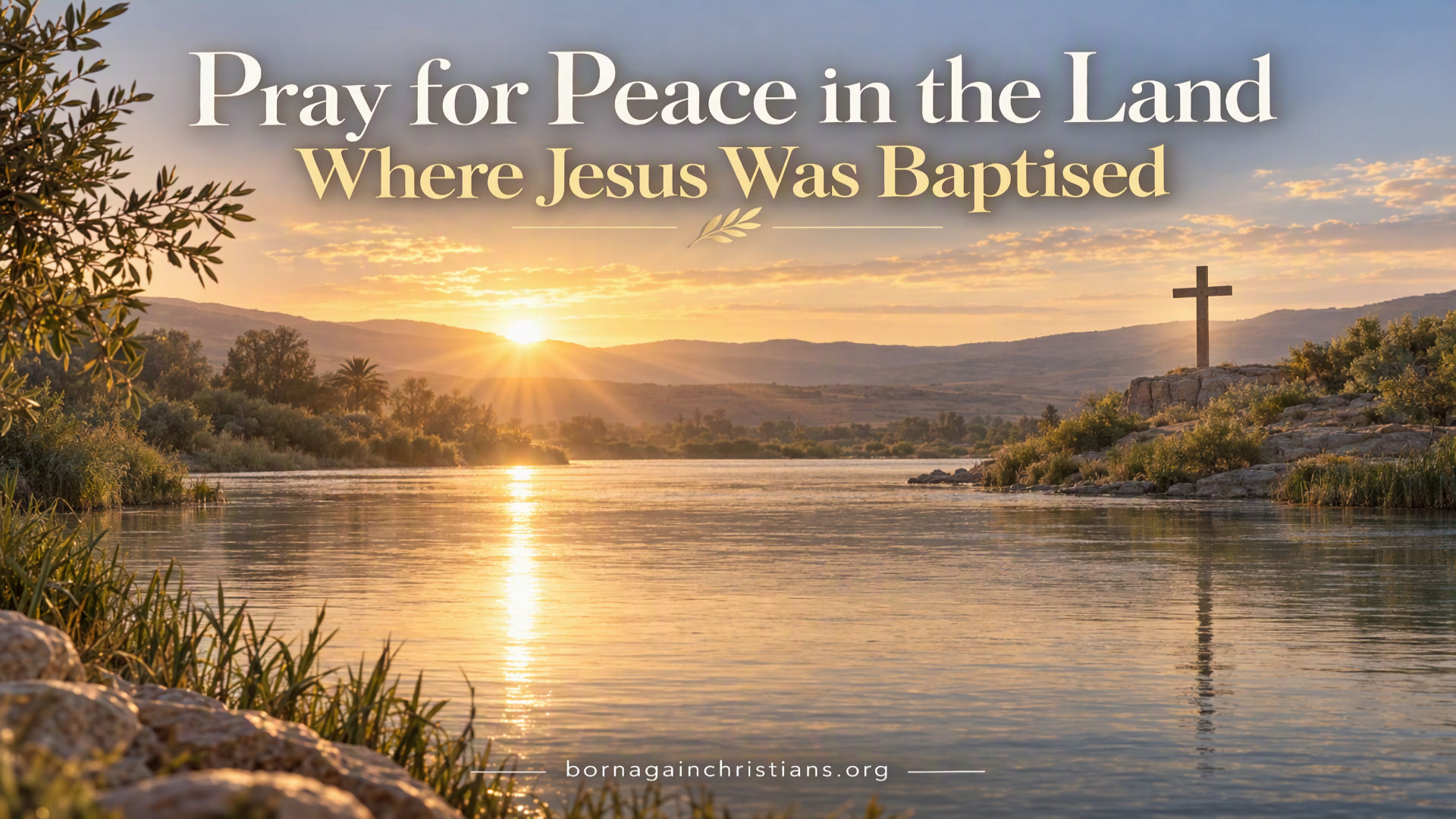
Many of us have been saddened by the news that came out of Jordan this week. At a church in the village of Hammoud, near Karak, gunmen opened fire during a funeral. At least seven people were killed and many more were wounded. The authorities have described it as a terrorist attack. Families who had gathered to mourn one death now carry the weight of several more. It is a heavy and sorrowful thing.
This happened in a land that is not strange to the pages of Scripture. The Jordan River runs through the country, and the traditional site of Jesus’ baptism is there at Al-Maghtas, Bethany beyond the Jordan. It was in those waters that John the Baptist called people to repentance, and it was there that Jesus came to be baptised. The heavens opened, the Spirit descended like a dove, and the Father spoke from heaven, “This is My beloved Son, in whom I am well pleased” (Matthew 3:16-17, NKJV). John himself ministered in the wilderness regions around the Jordan, preparing the way of the Lord. Mount Nebo, where Moses looked out over the Promised Land, is also in modern Jordan. The places we read about in the Gospels and the Old Testament are not far from where this attack took place.
But it sits very near Karak, and that area is biblical. Karak is widely understood to be the ancient city called Kir-Hareseth, or Kir of Moab. That was one of the main strongholds of the Moabites. We read about it in 2 Kings 3, when the kings of Israel, Judah, and Edom came against Moab and pressed the fight right up to Kir-Hareseth. The king of Moab, Mesha, in desperation offered his own son as a sacrifice on the wall. Isaiah and Jeremiah both speak of the mourning over Kir-Hareseth when they give the burden against Moab (Isaiah 16:7, 11; Jeremiah 48:31, 36). The land around there is the old territory of Moab, east of the Dead Sea, part of the biblical world we know from the Old Testament.
That biblical connection makes the news even more sobering, where the same land that once heard the voice of John and saw the Son of God standing in the river now has blood shed upon it again. Yet the Lord has not changed. He is still sovereign over that place, and He is still near to those who are broken-hearted.
We are told to pray for all men, for kings and for all who are in authority, that we may lead a quiet and peaceable life (1 Timothy 2:1-2). That includes the believers in Jordan who are grieving, the wounded who are still recovering, and the leaders who must respond. It also includes our own cities.
Even here in Glasgow and across Scotland we have learned that we must be watchful. Extremists have made their presence felt in places we once thought were far removed from such things. The trouble is not only far away.
Jesus said that in the world we would have tribulation, but He also said to be of good cheer because He has overcome the world (John 16:33).
So we pray. We ask the God of all comfort to draw near to those who are mourning in Jordan.
We ask Him for peace in a land that has known both the ministry of John and the violence of men. We ask Him for wisdom and protection in our own streets as well. And we keep looking to the Lord Himself, who is still on the throne and who still hears the prayers of His people.
The darkness is real and is all around us, but it is not the final word. Keep praying deeply folks.
The One who stood in the Jordan River two thousand years ago is the same Lord who sees every tear today, and He is able to give peace that the world cannot take away.
Discover more from Born Again Christians
Subscribe to get the latest posts sent to your email.