
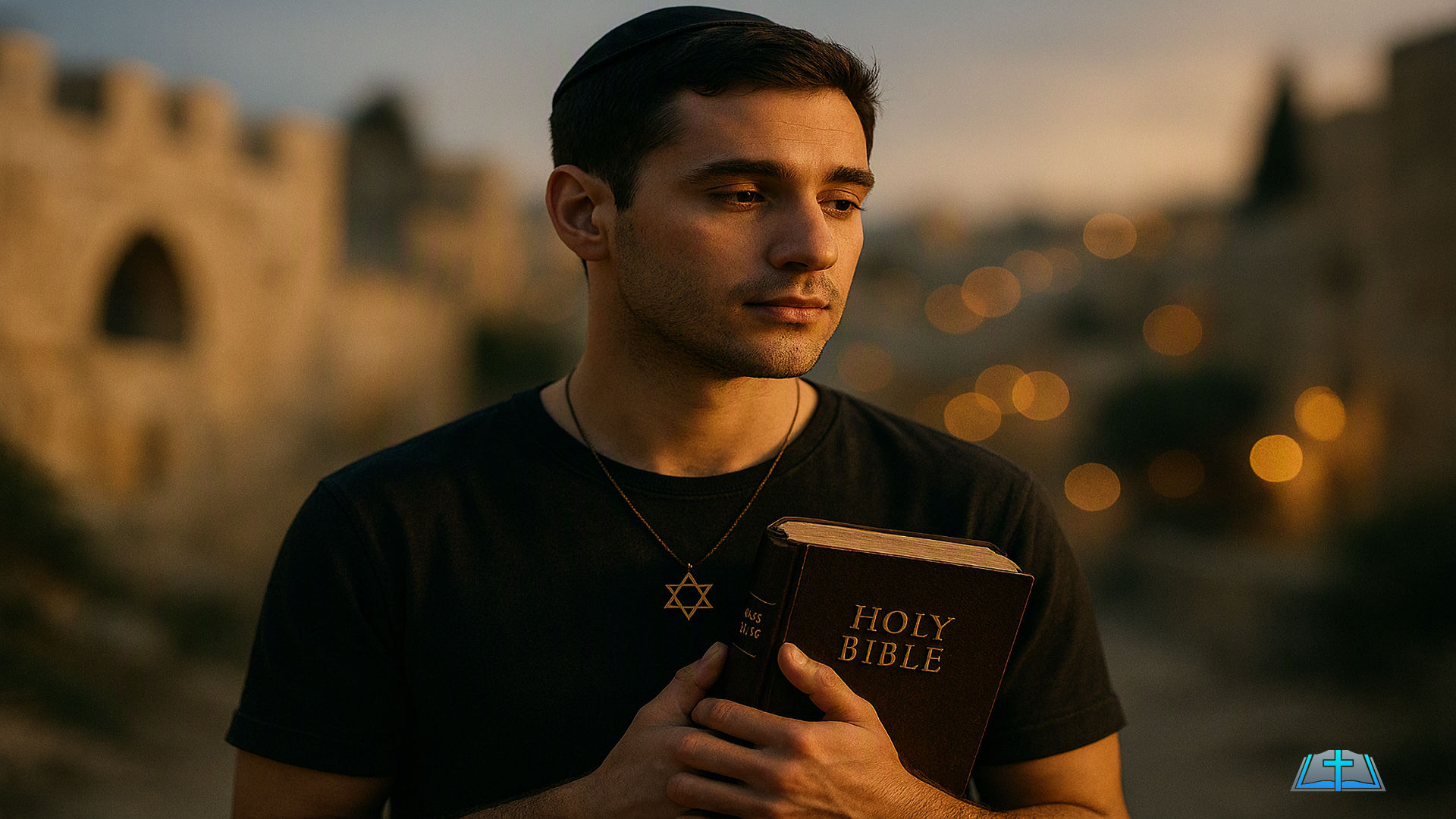
You know, folks, it’s always a joy when we hear of a Jewish person coming to faith in Jesus. We see it as a fulfilment of God’s promises and a sign of His ongoing work among the people He first chose.
Yet behind the joy there is often a quieter, harder reality: family rejection, identity crisis, confusion, and deep personal cost.
This is not rare. It is common.
“You’re No Longer Jewish”
When a Jewish person recognises Jesus as the Messiah, many others in the Jewish community conclude that person is no longer Jewish.
Faith in Jesus is frequently treated as leaving the Jewish people altogether; I hear stories of divorce, family cut-offs, and lasting estrangement surface again and again.
One person may be told to choose between a spouse and Jesus. Another may find doors closed at home, in the wider family, or in community life.
The pressure can be intense and long-lasting.
Several factors feed this reaction.
Culturally, many Jewish people grow up with the clear understanding that Jesus belongs to the Gentiles.
Accepting Him can feel like betrayal or abandoning one’s own people.
Historically, centuries of persecution carried out in the name of Christ, forced conversions, violence, and the Church’s frequent failure to stand with the Jewish people, have left deep scars.
Religiously, traditional teaching holds that the Messiah has not yet come because certain promises (lasting peace, the restored Temple, the knowledge of God filling the earth) remain unfulfilled. Belief in Jesus is therefore often seen as apostasy rather than a valid Jewish path.
The result is social stigma, exclusion, and, far too often, broken relationships.
What Scripture Affirms
Against this backdrop, Scripture speaks with clarity ~ A Jewish person who trusts in Jesus remains Jewish ~ Ethnicity and ancestry do not change!
The first followers of Jesus were Jewish. Jesus Himself was a Jew from the line of David who lived under the Law and taught from the Hebrew Scriptures; the New Testament does not cancel the Tanakh; it continues it.
Paul, himself a Jew who believed in Jesus, never stopped identifying as Jewish. He wrote, “I say then, has God cast away His people? Certainly not! For I also am an Israelite, of the seed of Abraham, of the tribe of Benjamin” (Romans 11:1, NKJV).
Later in the same chapter of Romans he insists that God has not finished with Israel (Romans 11:25–29).
The Church is not called to erase Jewish distinctiveness but to recognise that the gifts and calling of God are irrevocable.
An Extra Layer of Confusion
The path can be further complicated by teachings that use familiar Christian language yet present a different Jesus. Jehovah’s Witnesses are one clear example.
They speak of Jesus, the Bible, and salvation, yet they deny His full deity, reject the Trinity, and use their own altered translation of Scripture. What they offer is not the Jesus of the Tanakh and the New Testament, but a counterfeit.
This is no minor difference. It is a false religion that confuses and misleads. Their presence is felt on the streets of Jerusalem and even here in Glasgow on Buchanan Street, where they hand out literature and engage passers-by.
For a Jewish seeker who has already encountered their teaching, perhaps through a family member, the true Messiah can be hard to recognise clearly.
The language sounds similar enough to create uncertainty, yet the content is poison to the soul.
<>< <>< <>< <>< <>< <><
Another source of uncertainty comes from replacement theology, the teaching that the Church has permanently replaced Israel in God’s plans.
When a Jewish person already feels the weight of being told “you’re no longer Jewish,” and then hears from some Christians that God is finished with the Jewish people as a nation, it only deepens the confusion and the sense of loss.
Scripture says otherwise. God has not cast away His people, and the gifts and calling of God remain.
Clear, patient explanation rooted in the Tanakh and the New Testament is essential so that the real Jesus is not confused with a false one.
Walking with Them
For those of us who love the Jewish people and long to see them know their Messiah, these realities call for wisdom and compassion:
- Recognise the real social and family cost. Do not minimise it.
- To affirm that Jewish identity is not cancelled by faith in and following Jesus.
- Point consistently to the Scriptures; be Bible-strong, in both Testaments, rather than to cultural Christianity or gimmicky alternative systems.
- Pray specifically for Jewish believers facing rejection, and for their families.
Create space where Jewish people can explore Jesus without feeling they must abandon who they are.
Jesus Himself warned that following Him can divide families (Luke 12:51–53), yet He also promised that those who leave family for His sake will receive a hundredfold in this life and eternal life in the age to come (Mark 10:29–30).
Many Jewish believers have discovered that promise to be true.
The gospel remains “to the Jew first and also to the Greek” (Romans 1:16, NKJV).
When a Jewish person meets Jesus, the complications are real, but so is the joy of coming home to the Messiah of Israel.
Let us walk with them carefully, pray for them earnestly, and keep holding out the true hope found only in Him.
If you’re in the Glasgow area and would like to talk more about these things over a coffee or lunch, I’d be happy to meet.
Just get in touch.
Peter
Discover more from Born Again Christians
Subscribe to get the latest posts sent to your email.