
A Simple Biblical and Historical Guide
Dear friends,
We live in days when the world seems to be falling apart. Wars, confusion, and trouble are all around us. But the Bible gives us a different picture. The world is not spinning out of control. It is moving exactly according to God’s perfect plan.
The Lord gave us prophecy to comfort His people, not to frighten them. As the Scripture says, “Now may our Lord Jesus Christ Himself, and our God and Father… comfort your hearts and establish you in every good word and work” (2 Thessalonians 2:16-17, NKJV).
If you belong to Jesus, you have nothing to fear. The next great event on God’s calendar is the Lord Jesus coming for His Church.
The Promise of the Rapture
The Apostle Paul taught this wonderful truth very clearly. Around the year AD 50 he wrote these words to the believers in Thessalonica:
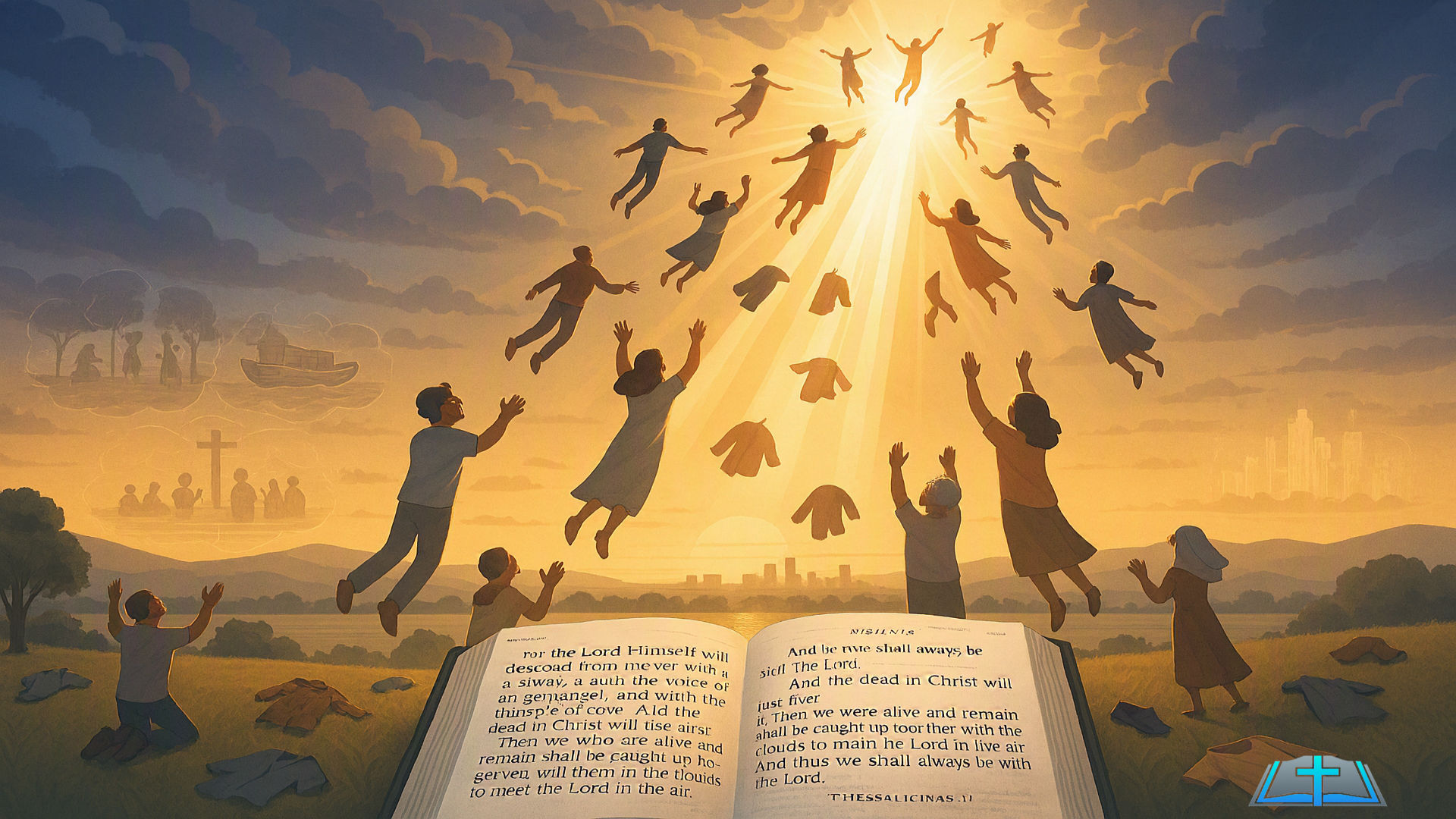
“For the Lord Himself will descend from heaven with a shout, with the voice of an archangel, and with the trumpet of God. And the dead in Christ will rise first. Then we who are alive and remain shall be caught up together with them in the clouds to meet the Lord in the air. And thus we shall always be with the Lord.” (1 Thessalonians 4:16-17, NKJV)
This “catching up” is what we call the Rapture. It is a real event. The dead in Christ will rise first. Then those of us who are still alive will be changed in a moment and meet the Lord in the air. What a glorious promise!
In the same letter, Paul warned the believers not to be shaken by false reports. He explained that before the Day of the Lord comes in judgment, there will be a falling away and the Man of Sin (the Antichrist) will be revealed.
But the Restrainer must first be taken out of the way. Many Bible students understand the Restrainer to be the Holy Spirit working through the Church.
When the Church is taken home, the door is opened for the Tribulation period to begin.
Helpful Rules for Studying Prophecy
When we study the end times, let me share from my experience and to keep a few simple rules in mind:
- To new believers you should begin with the Gospels like John’s Gospel and basic truths before diving into the more difficult parts of prophecy.
- We should not force today’s news headlines into every Bible verse. Let the Scripture speak for itself and don’t follow clickbait on YouTube, etc.
- Many prophecies come together and point to the same period at the end of the age.
- A loud voice does not always mean a correct voice. Test everything by the written Word of God, the leading of the Holy Spirit, and the counsel of mature believers.
These simple guidelines will protect us from confusion and fear.
Dispensationalism ~ Seeing God’s Plan Clearly
One of the most helpful ways to understand the whole Bible is through the dispensational view. This simply recognises that God has dealt with mankind in different ways during different periods of history. These periods are called dispensations or stewardships.
Salvation has always been by grace through faith in what God has revealed. But the responsibilities God gave to people changed from age to age, from the time of innocence in the Garden, through the giving of the Law, to this present age of Grace, and finally to the coming Kingdom Age.
This framework helps us rightly divide the Word of Truth; it keeps us from mixing the Old Testament Law with New Testament Grace.
It shows that God still has a wonderful future plan for the nation of Israel. And it makes the prophecies about the future much easier to understand.
The Hope Through the Ages
This blessed hope did not begin in modern times. It goes all the way back to the apostles.
Paul wrote about the Rapture and the soon return of Christ in the middle of the first century.
The early Church Fathers who followed the apostles carried on that same expectation:
- Clement of Rome, writing around AD 95-96, spoke of the Lord coming “soon and suddenly.”
- The Didache, an early Christian teaching manual from the late first century, urged believers to “be ready, for you know not the hour in which our Lord comes,” and described the Lord returning on the clouds of heaven.
- Justin Martyr (about AD 100-165) taught a literal resurrection and a thousand-year kingdom in a renewed Jerusalem.
- Irenaeus (about AD 130-202), who was taught by those who knew the apostles, wrote clearly about the future Tribulation, the Antichrist, and Christ’s literal reign on the earth.
These early believers lived with a strong sense that Jesus could return at any time. They looked for a real, physical future kingdom.
In later centuries, some teachers began to interpret prophecy in a more symbolic way, and the clear hope of an imminent return became less emphasised in parts of the Church.
In the 1800s the Lord raised up teachers who returned to the plain, literal meaning of Scripture. John Nelson Darby helped bring fresh understanding of the Rapture and the distinction between Israel and the Church. C.I. Scofield made these truths widely available through his Reference Bible in 1909.
In the early 1900s, Clarence Larkin gave us helpful books like Dispensational Truth, filled with clear charts and diagrams. His pictures have helped thousands of believers see God’s complete plan from beginning to end.
These men did not invent the truth. They simply recovered and explained what the apostles taught, what the early Church believed, and what a plain reading of the Bible shows us.
Living in the Light of His Coming
Because these things are true, we can face the future with peace. The Church is not appointed to wrath. Jesus could come for us at any moment. God will keep every promise He made to Israel. And one day soon we will be with the Lord forever.
So do not let the news of the day trouble your heart. Look up.
Your redemption draws near. Live holy, love one another, and tell others about Jesus while there is still time.
“Looking for the blessed hope and glorious appearing of our great God and Savior Jesus Christ” (Titus 2:13, NKJV).
May the Lord bless you richly as you study His Word. Keep looking up, He is coming soon!
Keep Bible Strong!
Peter
Discover more from Born Again Christians
Subscribe to get the latest posts sent to your email.